Beyond Monitoring: Using Machine Vision AI to Optimize Plant Feed
Introducing Netra 2.0
Webinar Replay:
Summary:
Processing plants have extensive instrumentation around their equipment but often limited real-time visibility into the material actually moving through the process.
- What size is the incoming feed?
- Is the material distribution changing?
- Are oversized particles entering the crusher?
- Is product quality remaining consistent?
- And can these observations be connected directly to plant control systems?
In this webinar we covered:
Introduction to Netra hardware platform, including improved field deployment features such as integrated lens cleaning wiper functionality, demonstrate PLC integration, and share lessons from recent plant deployments.
How Machine Vision AI can support feed management, process optimization, operational monitoring, and QA/QC across crushers, conveyors, mills, and material-handling systems.
Polls:
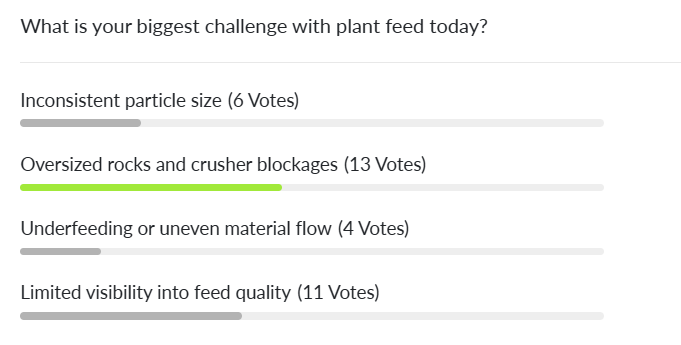
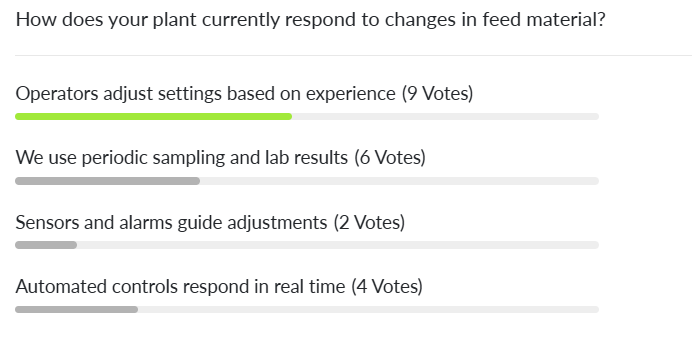
Q&A:
Q: Why why there should be a measurement in the combination space, right?
A: Because combination is one of the most expensive place for you to be guessing things.
Q: Do you ever see mining operations where steps are taken to bring blasting and team members together? Two teams working together on a scheduled, disciplined series of meetings and mutual reporting.
A: Yeah, absolutely. This is where I, see the biggest benefits. Like, if you can correlate the data where the multiple teams and come in either from a, pit supervisor, the blasting team and the plant manager, and then they can really see, like, what's going on, what? Design changes that have been done. What pit? Pit designs that have been there and how the blasting team is actually blasting that, and then how the material has been moved. It builds this understanding of like how each teams are doing their part and then kind of running the optimization. But now the running the optimization centrally because most every team strives to do their best, they run the optimization in silos. But now bringing it together, that's what drives the bigger kind of impact.
Q: what is a GPU?
A: It's a graphic processing unit. It's a term coined a way early. Well, for the gamers, essentially, Nvidia was the one who came up with the GPU, chips, graphic processing unit. Previously we only had CPUs, like, central processing unit, which are TPU kind of again. As a computer nerd, I'm trying to kind of explain here, but, essentially where you can track like pixels, right? And you can use the pixels in the GPUs to compute faster. That was kind of the origination about several years ago, in early 2000, which led to the evolution of the gaming industry. And now we are benefiting that for the mining industry. So Australia's game of mining. Yeah, I would say. Let's win.
Q: In the case of crushers, what control response options are available in order to use the information from the PLC. What does the PLC manipulate to adjust what settings.
A: Yeah. So this really can be done at a customization level. So the plant operator says this is what our size is that we want. One example: our top size is 40 inches of material. Now we want to measure every time a rock comes above 40 inches or in that range. We want to see a tag for that. And this is our control logic. We want to either activate a rock breaker from the crusher setting, or we want to wait three more seconds for the jaw to expand and then let the feed flow. All those decisions will be set up, and we take that information and then we generate tags to match that decision.
Q: With the installation on mobile equipment. Can the movement itself distort the images?
A: Not sure if I understand the question. So movement on how the material is moving. I believe it's for mobile equipment like on the diggers. Oh, okay. Yes. This is where I think the distortion does happen. If it's continuously. Because if you're measuring on the mobile equipment, which is kind of continuously running, we prefer to measure on the actual material itself rather than on the bucket, because the bucket position and size differs, but also the scene of this object is continuously moving. So there could be a motion blur. There could be a distortion. The best practice, in our installs, is more focused on the dig phase or the material which is about to be dug, and you get a better view of that material.
Q: Is it possible to do trials with the camera?
A: Yes, we do have a trial options. Yeah.
Q: Is the velocity of the belt a problem for the AI?
A: No, we have not seen yet, but we do calibrate the speed of the belt to match with the camera information. So camera has focal length, and the focal length each. We can control the exposure to match with the speed of the belt. So if it's too fast, we will kind of tweak some parameters, and it will get calibrated.
Q: Is it possible to use the system to deliver feedback back to the AI if the downstream result measurement is made available? The AI delivers information to the PLK, which makes adjustments. So the question is how was the PLC action? Learning about effectiveness of the system?
A: Yes, that's a really good question. And this is something I mentioned about kind of the maturity curve in one of my slides. That we are at the control level. The next step is to optimize level. So if we start to get the feedback loop, this will definitely help in understanding how the oversize material that's coming or the free trade that's coming. What is the equipment performance from that? Which means essentially the mechanical level. Right. What I call defining the boundaries of kind of what we are measuring is the physical level, which is the rock that's moving. The mechanical level. You have your own sensors. So if you can get and marry that data, we can start to build a feedback loop on the optimization of pressure, performance and all those things. We were already started to go in that direction, but that's something is the next phase.
Q: Blast design implementation quality can be can be a very ability is it could it be possible to link QC blast design implementation data including mobile explosive delivery truck performance specs to the process at the front end?
A: Yes. So I'll answer this in two parts. First is the data can be linked, the taxi information, which means what you have designed. What was the performance after that, which is the Blast performance assessment. It can be auto tagged if we have the location tracking built in from the loaders, trucks, and what's been measured at the plant. So this can be tracked more from just the understanding of how each blast resulted into what type of pressure, throughput, and the SCS and yield there. Are integration with the MMO trucks. We don't have that at the moment. Essentially move from the information of each loading data and the charging. So if you have design in our platform, then yes, we can integrate that. But we don't have a direct integrations with the new trucks. Oh, reach out to us, let us know, and maybe we can build it for you.
Q: Can this system be used under a drone system instead of fixed cameras?
A: Yes. So we are fragmentation, or flagship product on the fragmentation, was started with drone, and that's been there for almost eight years now. And it has gone through several iterations, several kind of AI model development. So that's one of our first fragmentation product. It's not the Netra system exactly, that real-time monitoring. But we do do drone-based fragmentation analysis at various steps along the chain.
Q: How do you handle situations where a large rock obstructs the vision for smaller rocks? Are there any metrics that compare this specific point of performance against conventional great based grading?
A: So what we have is the optical flow tracking. So large dog, if it's completely buried, the large rocks and then there is a smaller rock is buried on top of the large rock. Obviously, the field of view is obstructed, right? That usually happens more often if it's installed on the belt and you have a fully loaded kind of material there. But on the truck dumping, it is each passing rock. Optical flow tracking is built in even on the jaw side. Flow tracking is built in. So usually we don't see those problems there. This is a scenario where you have a fully loaded belt. So what we do have is we do have an estimation technique. So we take the calibration essentially base of the belt. We measure the empty belt through the camera. Essentially, we have the data of the empty belt. So we have the full load profile built in a 3D profile view. What's the measurement there? And now every rock that is passing, we build a 3D profile of that. So if there are a bunch of kind of buried rocks under the big rock, we use that estimation technique. We from the 3D profile method to estimate how many of kind of big rocks, so small rocks could be buried under that. So in simple terms, what it means is the AI model will detect what it is seen, which means it can outline the big rock. Whatever we see, let's say 2 or 3 inches buried down. But we know what is the base of the belt. So we will estimate that kind of two-inch difference that has not been seen.
Q: Does system currently capable of gathering data on a single product and monitoring a specific seed size, for example, percent passing the 3/8 inch ten millimeters on a number seven stone.
A: Yes. This this is kind of, you know, very specific there, scenario. So if we install kind of, the cameras, it can, it can measure all this information.
Q: Do you see any possibility of using Netra to improve screening effectiveness?
A: Absolutely. This is, I think, close to my heart because I think what I see is, we focus a lot on the blasting side. And then, this is almost a how the final product gets made. Right? And which is always interesting for me to understand. We do all this work. Like, you generate tons. You measure. And now this is at the end. You are seeing your products are being made, which is the cake side. So yes, we have done deployments to understand the screen effectiveness. Of understanding the quality contamination as well as the specs size. What needs to be made. But, just within a few seconds, if you're not seeing that size, what are the changes that needs to be done, which is making your screens more effective? Right. So yes, this is, definitely an area where Netra is already being used.
Q: How about foreign object detection?
A: Yes. I'm sorry. Netra can do foreign object detection. So essentially, any objects which are not rocks. Elaborate. So it's a separate class of model, which means that gets run. So you have gradation size. The models are running. It is continuously analyzing and measuring the rock size. But then if there are objects mixed with a rock, that can also be tracked and detected, and it can reflect them.
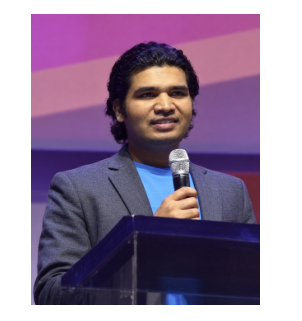
Presenter:
New technologies are rapidly changing the drilling, blasting, mining, and aggregates industries, empowering them in ways never before possible. Make sure you are taking advantage of the best tools available.
Check out our 2 Free E-books on AI applications for the drilling, blasting, and mining industries to see all the amazing advances that are available.
AI Guide for Drilling and Blasting
AI Guide for Mining
Watch our videos:
YouTube